


What cash on delivery is and why it keeps winning in LATAM
If you sell online in LATAM and you still don't accept cash on delivery, you're missing between 40% and 70% of your potential sales. It's that simple.
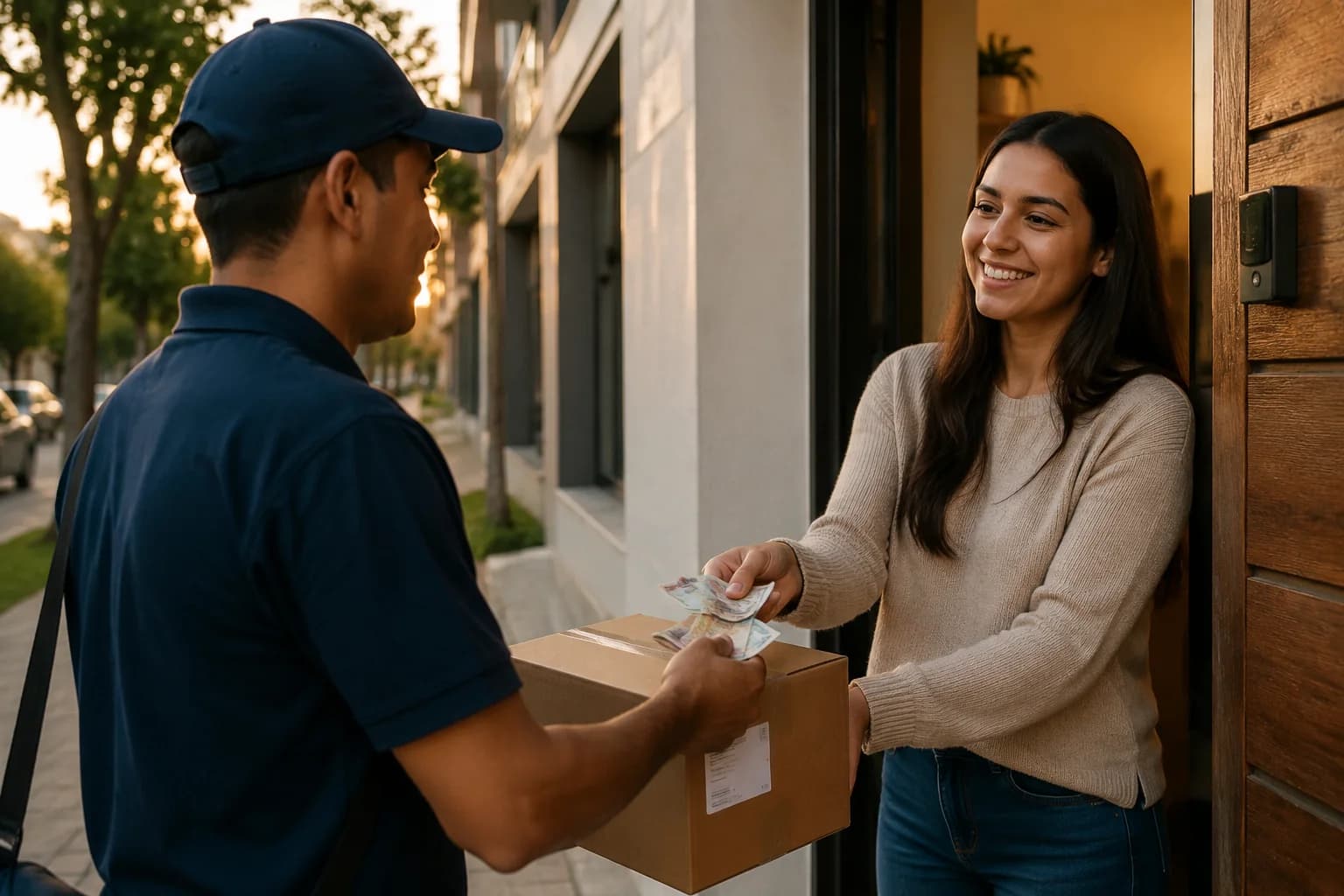
Cash on delivery (COD) is the model where the customer pays when the product arrives at their door. No card upfront, no prior transfer. Order, receive, pay. And even though it sounds like something from the last century, in countries like Colombia, Peru, Ecuador, the Dominican Republic, or Mexico it's still the method preferred by most online shoppers.
The Latin American buyer doesn't trust paying before seeing
There's a cultural reason behind this, and it's not going away soon. The average Latin American buyer grew up hearing stories of scams, products that never arrived, photos that didn't match reality. Asking them to pay upfront to a store they saw on Instagram 3 minutes ago is asking for an act of faith many won't give.
On top of that, a significant share of the market doesn't have a credit card. In Colombia, according to data from the Banco de la República, less than 30% of adults have an active credit card. In Peru, the number is even lower. If your only payment option is online, you're leaving out most of your potential buyers.
Where it works best: countries, products, and ticket sizes
Not every product or every market is ideal for COD. The general rule:
- Countries where it works best: Colombia, Peru, Ecuador, the Dominican Republic, Mexico (interior regions), Bolivia, Paraguay
- Countries where it's better to combine: Argentina, Chile, Uruguay (higher digital payment penetration)
- Ideal ticket sizes: between 30 and 200 dollars. Below 30, logistics costs eat your margin. Above 200, rejection risk goes up sharply.
- Best converting products: cosmetics, supplements, apparel, accessories, gadgets, impulse home goods
How the full flow works, step by step
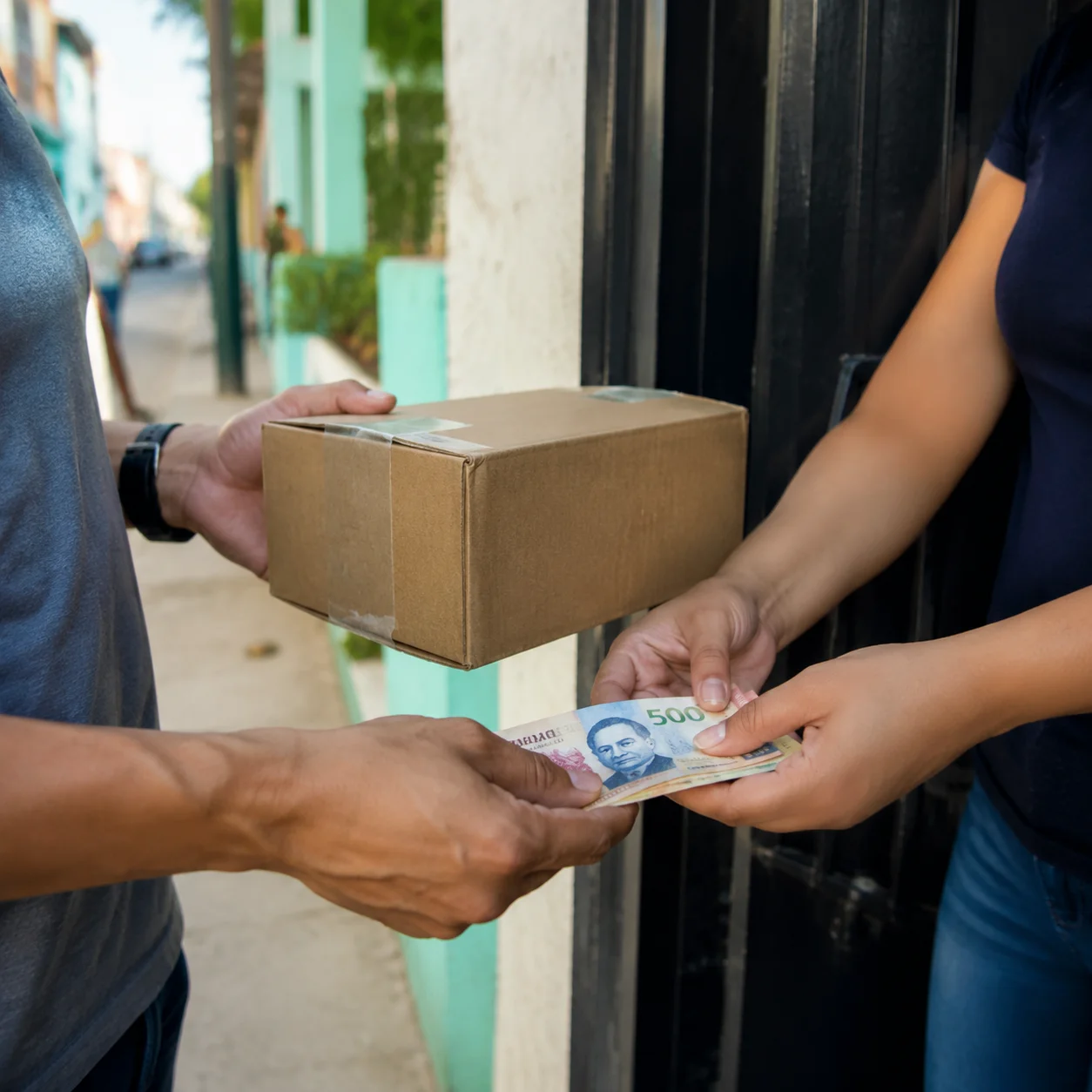
This is where many people get lost. COD is not "upload the product and you're done." It's a process with several friction points where you can lose money if you don't set it up well.
From click to checkout: which data to ask for and which not
The COD checkout has to be brutally simple. The less you ask, the more you sell. The mandatory and sufficient fields:
- Full name
- Phone (with format validation)
- Exact address
- City / department / province
- References (this is key in LATAM, don't skip it)
Don't require email. Don't ask for an ID number at checkout. Don't ask for date of birth. Every extra field drops your conversion between 3% and 8%.
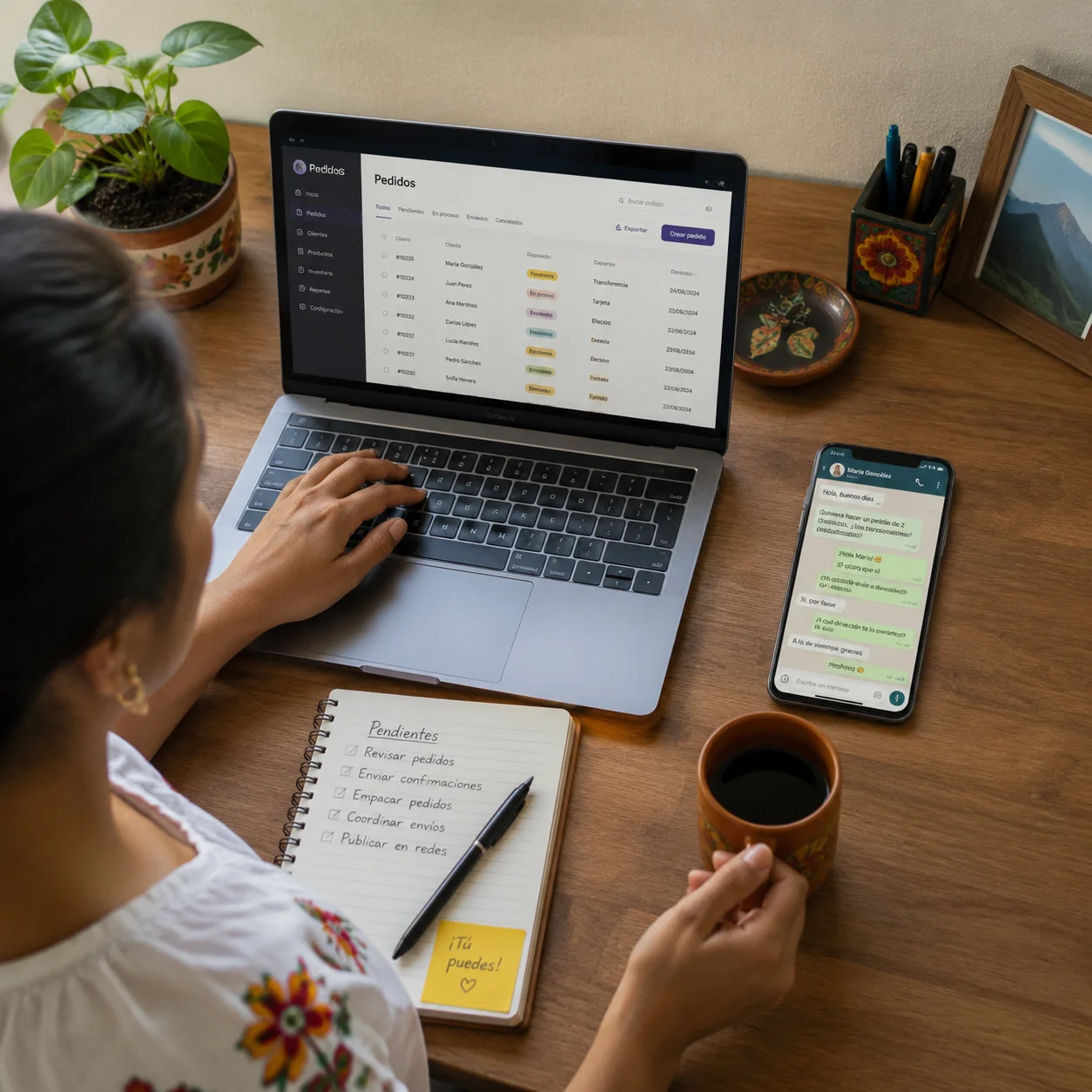
Order confirmation: WhatsApp, phone call, or automatic
This is where stores that make money split from stores that lose money. Never, ever ship a COD order without confirming.
Three ways to do it, ordered by effectiveness:
- Manual or automated WhatsApp confirmation: the customer gets a message 5-10 minutes after the order. Average response rate in LATAM: 75-85%.
- Phone call: more expensive, but recovers another 10-15% of those who didn't reply on WhatsApp.
- Automatic confirmation with a unique link: the customer confirms by clicking. Cheaper, less effective (45-55%).
My honest recommendation: WhatsApp first, phone call for those who didn't reply within 6 hours.
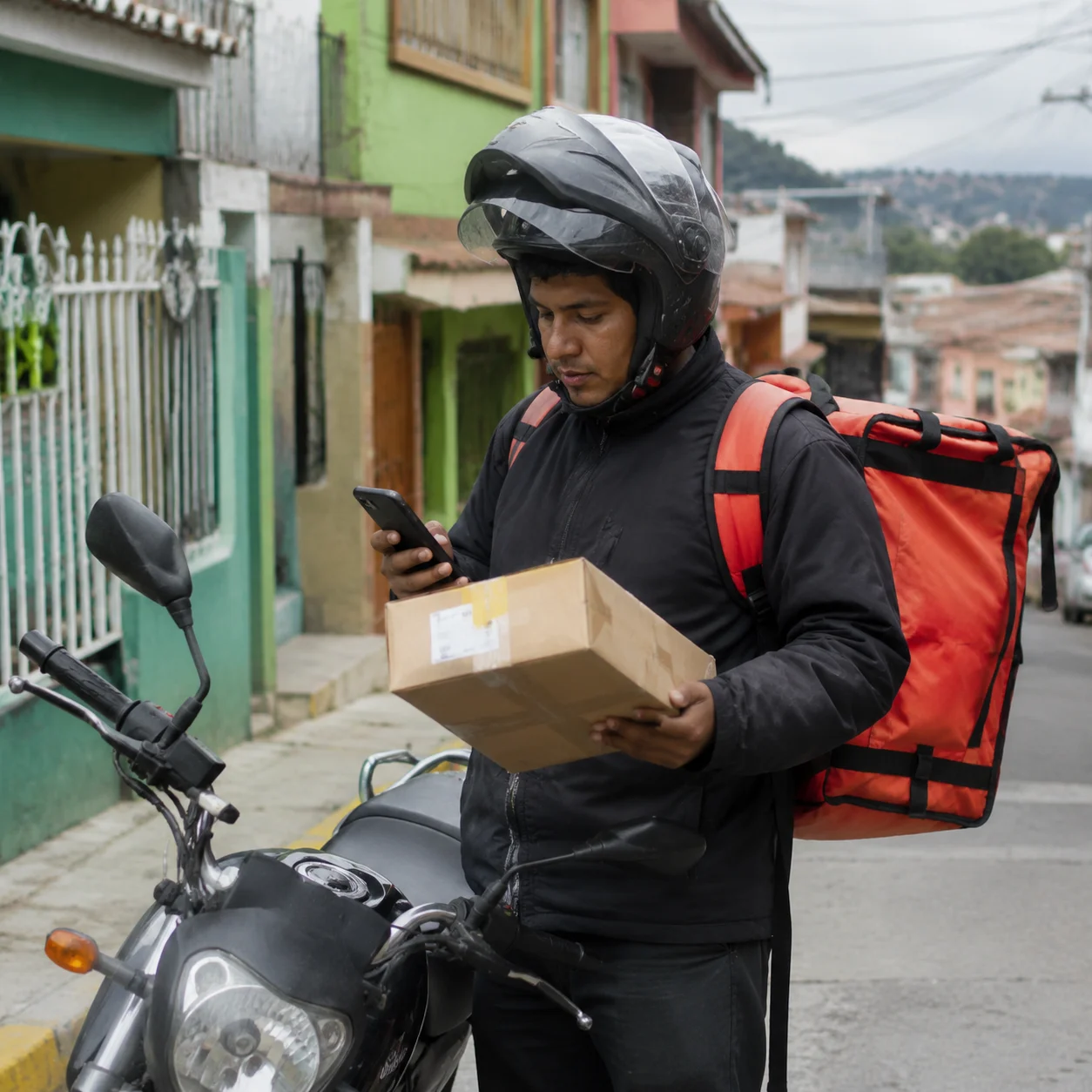
Courier dispatch: what to demand from your logistics partner
Not every courier handles COD well. What you have to require, no exceptions:
- Cash collection at destination (the driver collects)
- Money settlement within 7 business days max
- Report of undelivered orders with reason
- Retry option (minimum 2 visits)
- Insurance or loss coverage
If your courier doesn't meet at least 4 out of 5, find another one. No negotiation.
Collection at the door and money settlement
The customer pays the driver (cash or, increasingly, mobile transfer like Yape, Nequi, Bizum, Pix). The courier consolidates payments and settles with you in batches, usually weekly or biweekly.
Here's a critical point many ignore: your cash flow runs between 7 and 21 days between selling and collecting. If you start without a buffer, you drown.
The numbers you have to watch before turning it on
If you don't measure these three numbers, you're not selling COD, you're giving products away.
Effective delivery rate (and why 70% is your floor)
Effective delivery rate = orders delivered and paid / orders shipped.
- Below 60%: you have a serious problem. Review your order filter.
- 60-70%: gray zone. Works if the margin is high.
- 70-85%: healthy zone. This is where you need to be.
- Above 85%: very good, you're probably filtering too much.
Real cost per failed order
Every order that comes back costs you:
- Outbound courier cost
- Return cost (yes, you pay that too)
- Cost of the product tied up during the trip
- Opportunity cost (that stock could have sold to someone else)
On average, a failed order in Colombia costs you between 4 and 7 USD. In Peru, between 3 and 6. If your margin per sale is 8 USD, every failed order eats the profit of one delivered order.
Minimum margin for the model to make sense
Rule of thumb: your gross margin has to be above 40%. If you sell with less, COD is not profitable unless you have very high volume and dirt-cheap logistics.
Quick math: if 25% of your orders don't get delivered, and each failed order costs you 15% of the order value, you need a 40% minimum margin just to cover that leak.
Common mistakes that will cost you money
Accepting orders without validating the phone
Fake phone numbers are enemy number one. Validate format at checkout (length, correct prefix) and reject numbers that are clearly fake (1234567890, 0000000000).
Not confirming before shipping
This is responsible for 30-40% of returns. Shipping without confirmation is throwing money on the lawn.
Treating every product the same
A 15 USD lipstick and a 90 USD hair straightener don't have the same risk profile. For high tickets, add an extra confirmation layer or ask for a symbolic deposit.
Ignoring the coverage zone
There are neighborhoods and zones where the delivery rate drops to 40%. If you know them, block them at checkout or charge a surcharge. Don't accept them at the same rate as the rest.
Real case: a cosmetics store in Colombia
I worked with a Korean cosmetics store in Bogotá. They were selling well, but losing money on COD.
The starting point: 52% effective delivery
Out of every 100 shipped orders, 48 came back. The cost of failed orders ate 60% of their margin. They were one quarter away from shutting down.
The 3 changes that moved the needle
- Mandatory WhatsApp confirmation: they only shipped after a confirmed reply. Orders without a reply within 24 hours were canceled.
- Phone validation with OTP: if the customer didn't receive the code, they couldn't complete the purchase. Filtered out 18% of junk orders.
- Order Bump at checkout: they added a 12 USD complementary product. Average ticket went from 38 to 51 USD, improving absolute margin per order.
Result after 90 days with concrete figures
- Delivery rate: from 52% to 79%
- Average ticket: from 38 USD to 51 USD
- Monthly orders: went from 420 to 380 (lower volume, but higher quality)
- Monthly net profit: from -1,200 USD to +4,800 USD
Fewer orders, more money. That's COD done right.
This is NOT for you if...
You sell very low-ticket products
If your average product is below 20 USD, COD logistics costs will sink you. Better to combine with online payment and offer COD only for bundles.
Your margin is below 40%
I already explained it above. Without margin, the model doesn't add up mathematically.
You don't have time to confirm orders
COD without confirmation is Russian roulette. If you can't dedicate at least 1 hour a day to confirming and filtering, better start with online payment first.
How to turn on cash on delivery in Whatalo in minutes
Whatalo has native COD, not as a patch or as a plugin. From the dashboard:
- Turn on the "Cash on delivery" gateway in settings
- Define coverage zones and surcharges per zone
- Connect your courier (or use your own)
- Set up the WhatsApp confirmation flow
- Done, you're selling COD
You can also combine it with Order Bumps, 1-step checkout, and abandoned cart recovery. All native, all measured.
Frequently asked questions
Can I combine COD with online payment?
Yes, and it's the most recommended setup. Offer both methods. Many customers prefer to pay online if your store gives them confidence. Combining lifts your total conversion between 15% and 25%.
What do I do with orders the customer rejects?
First, write down the reason. If the pattern repeats (zone, product, customer profile), adjust filters. For customers who reject more than once, consider blocking them by phone number.
Is it worth charging a symbolic deposit?
For tickets above 80-100 USD, yes. A 10-20% deposit cuts the rejection rate in half. A customer who puts real money in is a committed customer.
Ready to open your store? Start free at whatalo.com