


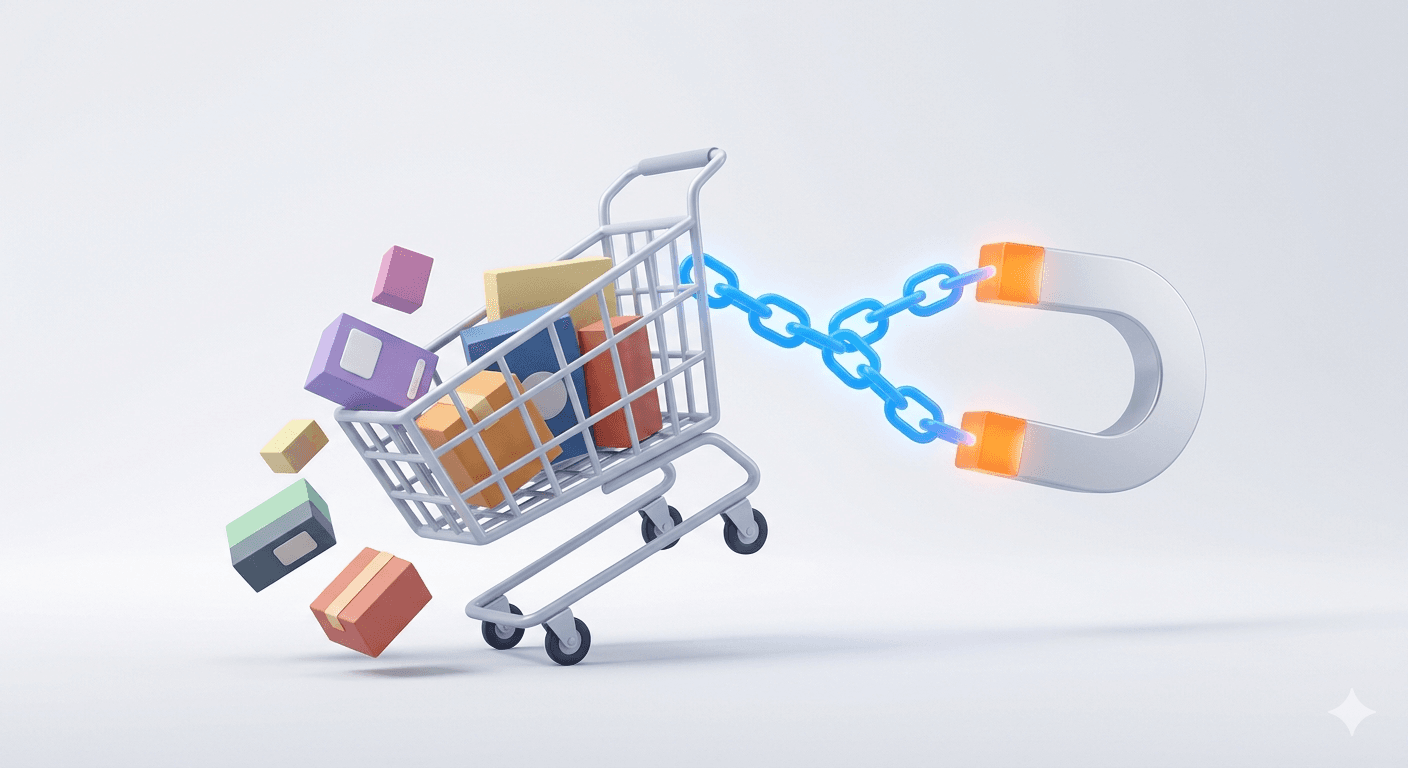
75% of your customers don't finish buying
That's not an exaggeration. According to e-commerce studies in Latin America, over 75% of shopping carts are abandoned before completing the order. Globally, the figure is 69%.
Think about that: out of every 100 people who start buying in your store, only 25 complete the order. The other 75 left — with their money.
Why do they abandon?
The main reasons according to industry studies:
| Reason | % of shoppers |
|---|---|
| Unexpected additional costs (shipping, taxes) | 48% |
| Don't want to create an account to pay | 26% |
| Don't trust the site with card details | 25% |
| Checkout process too long or complicated | 22% |
The good news if you sell with cash on delivery: the third reason (distrust with card details) no longer applies. Your checkout only asks for name, phone number, and address — information the customer needs to give you anyway to receive their order.
But even with COD, abandonments happen. The customer gets distracted, compares prices, forgets, or simply needs a nudge.
What is an abandoned cart in your store
When a customer starts the checkout and provides at least one piece of contact information (phone or email) but doesn't complete the purchase within 30 minutes, the system marks it as an abandoned cart.
What is automatically captured:
- Products and quantities they had in the cart
- Contact information (phone, email, name)
- Address if they had already entered it
- Totals including any applied discounts
With this information, the system generates a unique recovery link for that customer.
How the recovery link works
The recovery link is the most powerful tool against abandonments. Here's how it works:
- The customer starts the checkout and abandons
- After 30 minutes, the system marks it as abandoned
- A unique and secure link is generated
- You send that link to the customer via WhatsApp or email
- The customer opens the link and sees their checkout already pre-filled: their details, their products, everything ready
- They just have to click confirm order
Why does it work so well?
Because it eliminates all the friction of starting over. The customer doesn't have to search for the products again, doesn't have to fill out the form again. Everything is right there, waiting for them.
The difference between an abandoned cart and a recovered sale is often just a simple WhatsApp message with the right link.
Step-by-step recovery strategy
Step 1: Identify abandonments
Check the abandoned carts section in your panel. You'll see a list with the customer's details, the products they had, and the recovery link.
Step 2: Reach out quickly
Timing is crucial. The first hours after abandonment are the most effective:
| Timing | Recommended action |
|---|---|
| 1-2 hours later | First WhatsApp message |
| 24 hours later | Second attempt if no response |
| 48 hours later | Final attempt with an incentive |
Step 3: Use direct and natural messages
Don't send generic messages like "Complete your purchase." Talk like a real person:
First message example:
Hi [name], I noticed you were interested in [product]. Here's the link so you can easily complete your order, everything is saved: [link]
Second attempt example:
Hi [name], I just wanted to check if you still want the [product]. Stock is running low and I don't want you to miss out. Here's your link: [link]
Step 4: Connect with Google Sheets
If you have the Google Sheets integration enabled, you can set up a separate sheet where abandoned carts are automatically logged. This allows you to:
- See all abandonments in a spreadsheet
- Filter by date, product, or amount
- Track which ones you've already contacted
- Calculate your recovery rate
Automate with Google Sheets and Webhooks
For stores with a high volume of orders, the manual process doesn't scale. This is where integrations make the difference:
Google Sheets
Set up a specific sheet for abandoned carts. Each abandonment is logged as a row with all the customer information and the recovery link.
Webhooks
If you use automation tools like n8n, Zapier, or Make, you can set up a webhook that triggers with each abandoned cart. This allows you to:
- Automatically send a WhatsApp message to the customer
- Create a task in your CRM
- Send a scheduled follow-up email
How to reduce abandonments from the start
Recovery is good, but prevention is better. These configurations help reduce abandonments:
1. Simple checkout
Your cash on delivery checkout already has an advantage: it doesn't ask for card details. But make sure you don't add unnecessary fields. Every extra field is an opportunity for the customer to leave.
2. Clear costs from the start
48% of abandonments are due to unexpected costs. If you charge for shipping, show it clearly before checkout — not as a surprise at the end.
3. Clear shipping methods
Configure your shipping methods with estimated delivery times. The customer wants to know how much it costs and when it arrives before committing.
4. Order Bumps, not interruptions
Order Bumps are designed not to interrupt the purchase flow. Unlike popups or intermediate pages, the bump is a simple checkbox that doesn't pull the customer away from checkout.
Measure your recovery rate
To know if your strategy is working, track these metrics:
| Metric | How to calculate it |
|---|---|
| Abandonment rate | Abandoned carts ÷ Initiated checkouts × 100 |
| Recovery rate | Recovered orders ÷ Abandoned carts × 100 |
| Recovered revenue | Sum of the total of orders completed via recovery link |
A recovery rate of 5% to 15% is already significant. If you have 100 abandonments per month and recover 10, those are 10 sales you would have completely lost.
Summary
| Concept | Key data |
|---|---|
| Abandonment rate in LATAM | +75% |
| Main cause | Unexpected costs (48%) |
| COD advantage | Eliminates distrust with card details |
| Main tool | Pre-filled recovery link |
| Optimal contact time | 1-2 hours after abandonment |
| Contact channels | WhatsApp and email |
Every abandoned cart is a sale that almost happened. With the recovery link and a timely message, you can turn a good portion of those "almosts" into real money.