


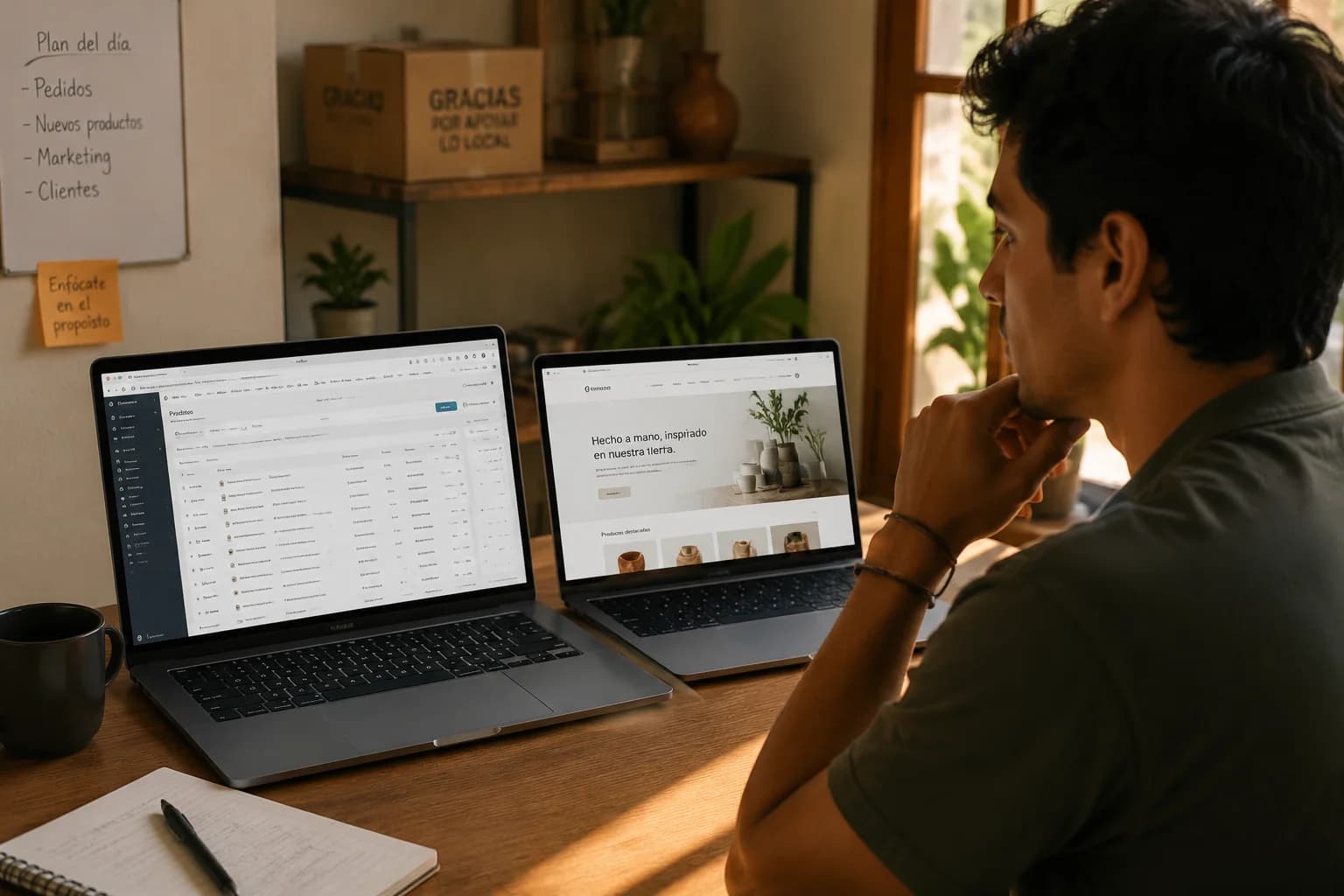
How much does your store platform actually cost you each month? Not the subscription line on the invoice, but the sum of per-sale commissions, mandatory apps, checkout plugins, premium templates, and developer hours to get the pixel working right. If you've never run the numbers, there's a high chance you're paying three to five times what you thought. And worse: that platform may be costing you sales you'll never recover.
Why more and more stores are leaving traditional platforms
Buying behavior in LATAM has shifted hard. Customers shop from their phones, pay cash on delivery, arrive from a Meta or TikTok ad, and decide in under 90 seconds whether to buy or close the tab. Traditional platforms were designed for a different market: credit card as the default option, three-step checkout, desktop-first templates, and a dashboard where you need a plugin for everything.
The hidden cost nobody shows you at signup
The monthly fee is the bait. The expensive part comes after:
- Per-sale commission between 0.5% and 2% on top of the payment gateway
- Optimized checkout app: between $20 and $80 a month
- Upsell or order bump app: another $30 to $50
- Premium template with solid mobile: $200 to $400 one-time
- Developer to wire up the pixel correctly: between $100 and $300
- Cart recovery app: $20 to $60
If you sell 500 orders a month at a $40 ticket, that 2% commission alone is $400 a month. Add the apps and you're easily paying $600 to $800 a month just on infrastructure. That's the salary of a junior community manager in many countries across the region.
Clear signs your current platform is holding you back
- Your mobile conversion rate is under 1.5% and you can't move it
- You need a plugin for every feature you ask for
- Cash on delivery is patched together with a third-party app
- Every visual change requires editing code or paying a developer
- The pixel reports something different from what your orders dashboard shows
- Your monthly app bill grew faster than your sales
If you checked three or more, you already have reasons to evaluate alternatives.
What a serious alternative must have in 2026
Switching platforms for the sake of switching is a waste of time. The new one has to solve concrete problems.
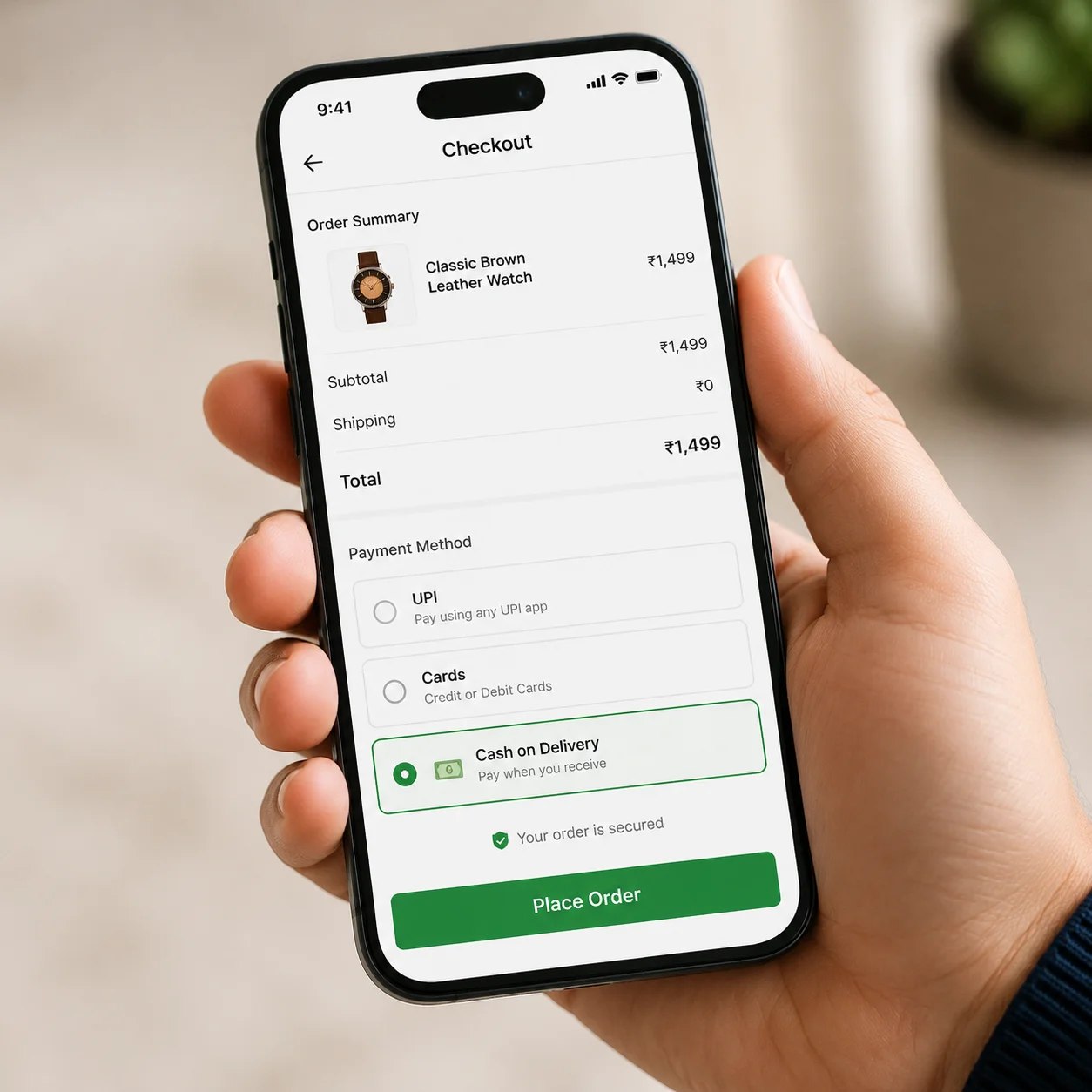
Short checkout and native cash on delivery
The three-step checkout is one of the biggest sales killers in LATAM. Every extra step loses between 15% and 25% of buyers. A one-step checkout, with minimal fields and cash on delivery as a native option (not as an external plugin), is the minimum you should demand.
Meta and TikTok pixels properly integrated, not patched
If your strategy depends on ads, a misconfigured pixel is money down the drain. Native integration with Meta Pixel, Conversions API, and TikTok Pixel must come out of the box, without you pasting scripts by hand or hiring someone to wire up events. If the platform forces you to use Google Tag Manager for something this basic, you've already lost.
Real design control without depending on a developer
A visual drag-and-drop page builder isn't a luxury, it's survival. When you launch a new campaign, you need to build the landing page in an afternoon, not wait two weeks for a developer.
Step-by-step guide to evaluating alternatives to traditional platforms
Step 1: an honest list of what you actually use today
Open your current dashboard and write down which features you really use every week. You'll discover you're paying for twenty things and using seven. Those seven are the floor of what the alternative must cover.
Step 2: test checkout from your phone, not your laptop
75% of your buyers reach you from mobile. If you're going to evaluate a platform, buy a product from your own phone, on mobile data, on the slow network at home. Time how many seconds it takes from "add to cart" to "order confirmed." If it goes over 90 seconds, it's not good enough.
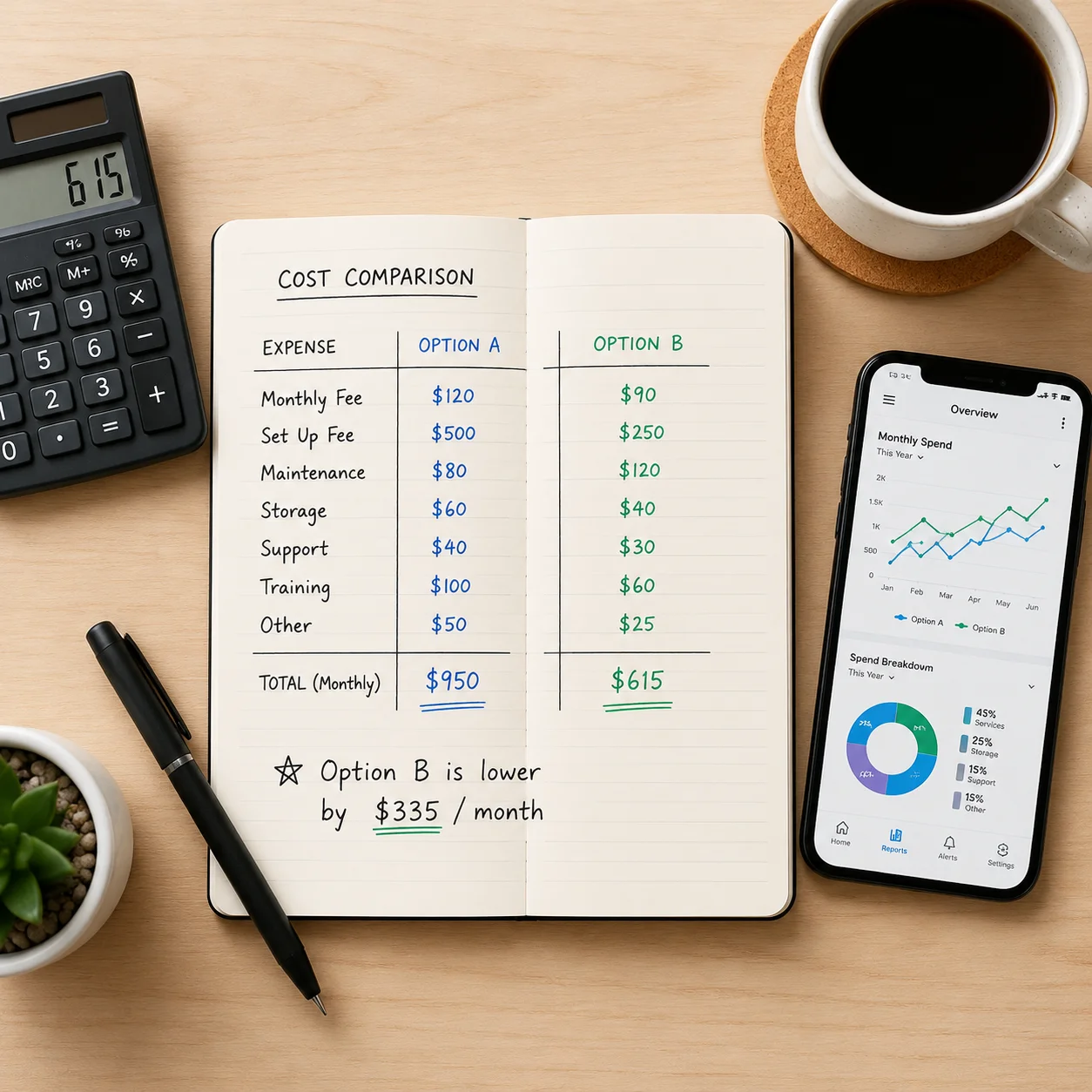
Step 3: calculate total cost over 12 months, not the monthly fee
Add up: monthly fee times 12 + estimated commissions on your projected revenue + mandatory apps + migration cost + hours your team spends learning. Compare that number with the equivalent scenario on the alternative. The 12-month difference is usually thousands of dollars.
Step 4: validate integrations with your current tools
Do you use spreadsheets for your logistics team? Do you have workflows in n8n, Zapier, or Make? Do you send data to your CRM through a webhook? The alternative must support all of that without patches. If it doesn't have a public REST API or native webhooks, drop it.
Step 5: migrate a pilot store before moving everything
Never migrate your main store all at once. Take a secondary brand, a product line, or a campaign landing page and set it up first on the new platform. Measure conversion, speed, and completed order rate for 30 days. Only then decide on the full migration.
Common mistakes when switching platforms
Migrating without 301 redirects and losing organic traffic
Your old URLs have SEO authority. If you let them die, Google punishes you for weeks. Before shutting down the previous store, map every important URL to its new equivalent with a permanent 301 redirect.
Copying the old design instead of redesigning for conversion
The most expensive mistake: replicating the previous store exactly on the new platform. If you're changing tools, take the chance to redesign with mobile, short checkout, and clear visual hierarchy in mind. Copying the old design wastes the migration.
Underestimating pixel and campaign reload time
The pixel needs to relearn. Meta takes between 7 and 14 days to reoptimize campaigns after a domain change or a primary event change. Plan a budget cushion and don't shut down campaigns that work right in the middle of the transition.
Choosing by entry price instead of real margin per sale
A platform at $29 a month with 2% per-sale commission is more expensive than one at $79 with no commission, if you sell more than 200 orders a month. Run the math with your real volume.
Real case: how a clothing store went from 2.1% to 3.8% conversion
A women's clothing store in Mexico was billing around $18,000 a month on a traditional platform.
Before: 3-step checkout and lost carts
Mobile conversion at 2.1%. Cart abandonment rate of 71%. Cash on delivery handled by a third-party app that charged an extra commission. The team wasted hours reconciling orders manually.
The change: 1-step checkout, order bumps, and native COD
They migrated to a platform with one-step checkout, native cash on delivery, order bumps to add accessories to the cart, and quantity offers to push second units. They redesigned product pages with a mobile-first approach.
The numbers at 90 days: average ticket, repurchase, and CAC
- Mobile conversion rose from 2.1% to 3.8%
- Average ticket grew 22% thanks to order bumps and quantity offers
- 60-day repurchase rate went from 11% to 17%
- CAC dropped 18% because the same campaign converted more
- Monthly revenue closed at $31,000 at the end of the quarter
It wasn't magic. It was fixing checkout, cash on delivery, and visual hierarchy.
When you should NOT switch platforms

If you're barely making your first sales and still validating product
If you've done fewer than 50 orders a month and still don't know which is your winning product, switching platforms is noise. Focus on finding the product, not optimizing the tool.
If your team doesn't have time to relearn the dashboard this month
A proper migration takes between two and four weeks of real attention. If you're in the middle of a launch, in peak season, or with your team maxed out, hold off. Better to migrate well in February than badly in November.
How Whatalo fits into this conversation
Whatalo was born thinking about this market. It's not a generic platform adapted to the region: it's a platform designed for how selling happens in LATAM today.
What we solve without plugins or per-sale commission
- Native cash on delivery, not patched with apps
- One-step checkout optimized for mobile
- Order bumps and quantity offers included
- Abandoned cart recovery without an extra app
- Visual drag-and-drop page builder
- Meta Pixel + Conversions API and TikTok Pixel integrated out of the box
- Spreadsheet sync, webhooks for n8n, Zapier, or Make
- Public REST API
- Multi-store with custom domain
- Zero per-sale commission: you only pay the monthly fee
What we don't do and you should know before trying
We're not a solution for stores with more than 50,000 SKUs and complex multi-warehouse inventory logic. We don't have a marketplace of a thousand third-party apps, because our bet is that the important things should come native. If your model depends on very specific configurations you've already patched together, evaluate before migrating.
Next step
Take 30 minutes this week. Calculate the real 12-month cost of your current platform, adding commissions and apps. Compare it with an alternative that covers short checkout, cash on delivery, and a native pixel. If the difference justifies the change, set up a pilot store and measure for 30 days. The numbers decide, not opinions.
Ready to open your store? Start free at whatalo.com